Layout

Showing posts with label Breastfeeding. Show all posts

Tuesday, August 7, 2012

Worldwide Breastfeeding Week

Did you know that it's Worldwide Breastfeeding Week?  Well, it is!

In honor of WBW, I wanted to share some information as to why BFing is so important to me:

  • Promotes Mother-Baby Bonding
  • The best food you can give your baby, it's what nature intended
  • Some research indicates that Formula Feeding can cause obesity in adulthood and a higher risk of allergies than BF babies
  • Helps protect children from asthma, SIDS and Diabetes
  • It's free (for the most part)
  • Important antibodies are passed from mother to baby
  • Breastmilk is a complex food and changes with the needs of your baby, which formula manufacturer's have yet to master
While BFing is not for everyone, I am glad that I have chosen this route for my children.  We have had ups and downs along the way, but there are so many resources to help you have a successful BFing relationship.  One of my favorite resources is Kellymom.com. 

From clogged ducts, to bleeding nipples, to bad latch, to supply issues and reflux, I feel like we've gone through every hoop.  Dylan had a terrible latch in the hospital and I was so sore before we even got home.  We were able to have his frenulum clipped before leaving the hospital which helped a ton!  To prevent further confusion, we did not introduce a bottle until 3 weeks old.  We continued to work on his latch until it was perfected.  Danny was such a big help and encouraged me to not give up (he knows how much I loathe pumping, so we knew that we didn't want to exclusively pump and bottle feed). 

Something that I didn't experience a lot of with Marissa was spitting up.  Dylan, however, is a different story.  He is what Kelly Mom refers to as a "Happy Spitter."  At first I was a bit concerned with the amount he was spitting up.  After talking with the pediatrician, we decided that it was completely normal for him to spit up some.  Actually, all babies have some form of reflux due to the immaturity of their esophagus.  Since he was not spitting up entire feedings and was gaining weight well, we decided to label him as a "Happy Spitter."

From Kelly Mom: If your baby is a ‘Happy Spitter’ –gaining weight well, spitting up without discomfort and content most of the time — spitting up is a laundry & social problem rather than a medical issue.

Knowing this information put me at ease, and although Dylan is almost 8 months old, he still spits up.  We're hoping he will outgrow it completely by 12 months! :)  It certainly doesn't look like he misses any meals, though.

Anyway, I'm rambling...check out Kellymom.com for all your BFing questions!  One day I may share pictures of my last nursing session with Marissa. :)  It is very special to have those memories, but I'm not sure I am ready to share them yet. 

Happy Worldwide Breastfeeding Week!

Tuesday, August 9, 2011

Working Moms, BFing and The Law!

Maternity leave has come and gone and the working mom is heading back to work.  I will say that this may not be the easiest transition on you or your little one, but you'll adjust and make due (or you'll quit your job to be a stay at home mommy :-D)

If you've invested in a good pump, you should be able to keep your pumping sessions under 20 minutes.  No matter how good of a pump you buy, baby is still the most efficient at getting your milk out.  A pump just can't mimic your baby 100%, so you may experience a decrease in production over time.  It's important to make time to pump, or you'll find that supplementing with formula is in your near future.  So don't make a habit of skipping pumping sessions with the thought of "I'll do it later".

With that said, one good thing that President Obama has done, is set new laws to protect nursing moms. 

This website has detailed information on the laws set forth.  Read it, know your rights and make sure your employer knows your rights as well.

A few key points:

  • Employers with 50 or more employees must comply with the laws in the above links.
  • Employers must provide you with a private room that is not a bathroom (ummm, hello?!? Would you want to eat in a filthy, disgusting bathroom? I didn't think so!)
  • Employers must provide you with adequate breaks (15-20 minutes)
  • Employers must allow nursing mothers time to pump for the first year of your child's life
Luckily, I work for a company who has been more than accommodating during my nursing career.  Don't feel guilty for taking a break to pump.  Not only does nursing benefit you and your baby, it also benefits your employer.  Typically, nursing mothers and babies have lower health care costs (which in return saves your company money). 


If you start to notice a decrease in supply from pumping, there are a few things you can do:
  • Eat oatmeal on a regular basis (home made oatmeal is ideal, but the pre-packaged stuff will do).
  • Increase water intake and decrease caffeine intake.
  • Avoid decongestants and many over the counter medicines.  Many medicines can dry your milk supply up. 
  • Eat high protein snacks and meals.
  • Take herbal supplements such as Fenugreek, Mother's Love More Milk Plus and Goat's Rue (found online and at your local vitamin stores).
  • Nurse as often as possible (remember, baby stimulates production better than your pump).
  • Add in additional pumping sessions (like right before bed).
  • After you think you've gotten your last drop out of your pumping session, let the pump run another 5 minutes, this will normally give you an additional let down.
  • You can also talk to your doctor about medications that you can be prescribed to you. 
    • Reglan is one that many doctors will give you, though you need to take caution while taking this drug.  My doctor told me that the most she would prescribe this for is 2 weeks at a time.  The side effects are normally severe depression and thoughts of suicide.  So, I decided to forego this medication.  I'm sorry, but I wasn't willing to put milk production before my mental wellness.
    • An alternative to Reglan is Domperidone.  This is a safe drug while nursing, though it is not actually prescribed to increase lactation.  You can do some additional research on this and decide if it is something you feel comfortable using. 
    • As always, consult a doctor and/or lactation consultant before beginning any prescribed medication.
With this last segment (unless anyone has any additional questions), I have officially finished nursing Marissa.  It's bitter sweet.  While I don't miss the pump one bit, I will miss the bonding experience I got with Marissa.  I'll have about a 4 month break before Baby #2 comes along (I seriously can't wait until we have a NAME for "Baby #2").  It's been a journey with ups and downs, but I am so glad that I made it this far!

Good luck in your adventures!  Feel free to ask me any questions.  I am FAR from being an expert and everyone's experience is different, but I would be happy to help as much as I can.


Thursday, August 4, 2011

Bringing Baby Home/Pumps!

So you've finally checked out of the hospital and brought your baby home.  You might be feeling a little lost and wondering who in the heck trusted you with an itty bitty, fragile baby!?!  :)

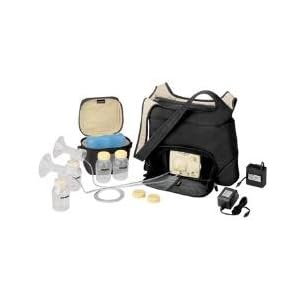
The LC at my hospital highly suggested that I have a double electric pump at home.  So we drove from the hospital to Target where I purchased a Medela Pump In Style Advanced (PISA).  Since I had the pump on my baby registry, Target sent me a 10% completion coupon in the mail so I got 10% off of my purchase (hey, every little bit helps). 

Medela PISA:
This is not the end all be all pump.  There are many great pumps out there and you ultimately need to do a little research and see which one sounds best for you and your wallet.  These little pumping machines are not exactly cheap.

I have also heard great things about the Ameda Purely Yours double electric pump.  Shop around, find the best price, read reviews and I'm sure you will be happy with your final purchase.  Just remember that usually once a pump has been opened, it cannot be returned (for health and safety reasons).

Over the next few weeks you will notice a lot of changes.  Keep in mind that it takes up to 6 weeks for your milk to regulate.  You may need to pump in between nursing sessions for relief and you might leak at the first cry of your baby.  You will likely be sore and think that this will never get easier.  Plus add in the post partum "baby blues" and your hormones being all out of whack and you might be feeling like this isn't for you.  This is all normal.  Persistence is key!  You CAN do this!  It does get easier, it becomes like a second nature and you WILL get sleep again, I promise. :)  Just take one day at a time and trust that your body can do this.  You have to be dedicated to making this work...it doesn't just come delivered on a silver platter. 

Enjoy this bonding time with your baby because there will be a day in your not so distant future that your baby doesn't want to be held and coddled...instead they want to run ramped through the house, eating dog food, licking floors and getting into mischief.  Take this time to get to know your baby, read his/her cues.  I think you'll be surprised at how well you get to know your baby.  You're the mom and you do know best, trust in yourself and know that everything will work out.

The following sites are great resources and can answer almost any questions you may have:


Reach out to other mom's who have successfully BF.  Having a great support system and determination is your #1 key to success.

Next up we'll discuss pumping at work, keeping a healthy BFing relationship with your baby and your BFing rights within the law!


BFing 101

Okay, you've thought about why you want to BF, set your goals, baby is on his/her way and now you're wondering what the heck happens next?!

Surprisingly, many women think that their milk comes in before the baby arrives.  This is typically not true.  In fact, you will probably have already checked out of the hospital and taken your new bundle of joy home before your milk comes in.  Trust me, you'll know when your milk comes in.  The stuff is literally like liquid gold.  I remember the first time I pumped at home and milk actually came out instead of colostrum.  Danny would have thought that I won the lottery because I was so excited and amazed that my body could do that.  There's nothing wrong with formula, but a mother's milk was created and intended for your baby.  I know some of you are probably reading this thinking, "okay, Alicia is off her rocker" but anyone who has gone through BFing before probably knows the feelings and emotions I'm talking about. 
With labor and delivery your body produces hormones that signal production.  At first, your body will create a very thick, nutrient rich food called colostrum.  Colostrum contains lots of antibodies for your new baby!

Many women start a downward spiral while they are in the hospital by immediately supplementing with formula because their milk hasn't come in yet.  This is your first mistake!  A newborn baby's stomach is literally the size of a marble.  Which means that their stomach fills up fast and empties fast, requiring nursing often (along with eating comes lots of fun diaper changes...you will be amazed at what such a sweet, little, innocent baby can produce).  The sucking motion of the baby also helps to stimulate production.  So instead of giving baby formula and magically waiting around for your milk to come in, put the baby at breast as often as possible.  Offer both sides as well so that your milk comes in evenly. 

**Important reminder:  BFing is a Supply and Demand System!**

Here is an example of what your baby's stomach looks like during the first week of life:


So there is no need to try and shove 3 ounces of formula down your newborn baby's throat.  It will most likely end up in spitting up, upset tummies and an unhappy baby.  There is such a thing as over feeding a baby!

Next you might find that your new bundle of joy is more interested in sleeping than eating.  Skin to skin contact is a great way to keep baby awake and help with bonding.  Undress baby and keep baby close to you for warmth.  Softly stroke baby's back, tickle toes, hold his/her hand to try and keep him/her awake.  Keep in mind this is all a learning process and baby may have a hard time learning to latch and suck all at the same time.  Gentle tickling/pressure on the jaw bone will sometimes signal baby to start sucking.  I don't know how many times the lactation nurses at my hospital would nudge Marissa a little and it worked like a charm!

For the ladies who will be deliverying at my local hospital, consult the lactation consultants (LC) on staff.  They are such a great resource, very encouraging and can answer any questions or doubts you may have.  Use them while you are in the hospital and be sure to take their number when you go home.  They really want each and every woman to successfully BF.  Again, this is all a new experience and being a bit of a shy person myself, don't be afraid to ask visitors to give you some time alone with baby while you nurse.  No one wants an audience while you are trying to figure out how to feed this screaming baby, without flashing the world!  Also, your husband can be such a great resource and support system.  He should be in the room when you are nursing, offer to get you a pillow, get you a glass of water, ask the LC questions and assist in any way possible.  Danny was so supportive during the learning process with Marissa.  Just hearing him say "you're doing a great job" meant more to me than anything!

Your lactation consultant can also set you up with a hospital grade pump while you are at the hospital if you feel that you need it.  Don't be afraid to ask.  They will also provide you with lanolin cream (for your poor, sore nipples), gel pads, a syringe to feed with if necessary and extra pump parts that are yours to take home when you leave. 

While in the mix of changing diapers, nursing, entertaining visitors, enjoying your new baby, bonding as a family and taking your new life in...don't forget to eat!  It's very important for nursing moms to eat healthy, well rounded meals.  You need extra calories to produce milk.  It's also very important to stay hydrated.  While I know you are probably dying for a diet coke, a giant cup of coffee or an ice cold beer or martini, you need plenty of water to keep you hydrated.  It's okay to indulge in a cup of coffee or a beer here or there, but now is not the time to take 6 espresso shots or throw back a six pack. ;-)

When we came home from the hospital with Marissa, Danny had a pack of Guinness in the fridge waiting for me.  I had read that dark beer helps with milk production.  Just one a day, nothing too crazy and is perfectly safe for baby.  Danny says it was all in my head because I thought it would help my milk production, but the taste really did grow on me.  I've always been a Miller Lite girl, myself. :-D

Since we've discussed nursing while in the hospital, I'll try to cover nursing the first few weeks at home next.  Any questions?


Special Request

A loyal reader of mine, Andrea, has specifically requested some information on Breastfeeding (BFing). So, we’ll call this BFing 101! I may break this into several segments, just so my readers don’t feel too overwhelmed or tired of reading one long entry.


Let me preface by saying that I am not an expert, I am not a lactation consultant, I am not a doctor and I am not a La Leche League representative. But, I am a mom who has been BFing for almost a year; I’ve had ups and downs, tears and joy along the way.

First, I think it’s important to ask yourself why you want to BF. Health benefits for mom and baby, cost savings and mother/baby bonding are just a few of the reasons why I chose to BF.

Second, I think it’s important to set goals. Do you wish to BF just while you are on maternity leave? For the first six months? For the first year? Or until the baby self weans? It’s ideal to set goals, but keep in mind that it’s okay to adjust your goals. Ultimately, a happy momma equals a happy baby! The end result is that you need to feed your child. Whether that be with exclusive BM or formula; don’t beat yourself up (I know firsthand, easier said than done!).

Lastly, you need to know that while BFing is a very natural thing to do, it doesn’t always come naturally. It’s a learning process for both baby and first time moms. Patience is a virtue. I will tell you straight forward that the first few weeks will probably be hard. You will probably want to give up. You will be engorged, you will leak spontaneously in the most awkward of situations, you will feed the baby around the clock, and you will wonder if you will ever sleep again.  You will wonder if you are producing enough milk, you will wonder if you are producing too much milk, you may feel overwhelmed with visitors and your mom, your sister, your neighbors-cousin's-mom giving you advice.

My biggest piece of advice is to hang in there!